
S63 counselling for ADHD,LGBTQ+,anxiety
telephone,online and text counselling help in Rotherham South Yorkshire
Counselling to focus on YOU
Empathic listening to understand
My journey with counselling began with a need to understand depression more when a relative took their life and my own struggles with my sexuality, identity and grief. I felt the odd one out and others seemed to breeze through life whilst I needed a guidebook for the basic things. Anxiety and feelings of not being good enough for myself,family and hard to find friends. The shame of not being the daughter I felt I should have been.The solitary life where only music and pets mattered.
The guilt took many years to lift and the impact was immense.I didn’t know why my view of life didn’t fit in with others and but I laughed it off- life and soul of the party as a permanent mask which drained me. I trained in counselling to learn not to earn but I reached a mid life crisis and decided to take the leap into helping others in my fifties and now I work with wonderful people from all walks of life in my own private role which is rewarding role but experience in life enriches it.
“She is a great therapist and a very lovely person. She’s very good at identifying issues out of all the things that you say – what’s important and what needs to be expanded on.”
“She listens to know, offers realistic advice, doesn't sugar coat things, exactly the kind of person I asked for”
My person centred Counselling Approach
My role as a counsellor is to provide space and guidance to help you on your journey of self-discovery; to enable you to examine your life and make new, meaningful choices within it.
I am a person-centred therapist, which means I have an empathetic, non-judgemental approach and provide emotional support. I offer a chance to reflect on the difficulties or problems you are experiencing in a safe and confidential environment, with someone from outside your day-to-day life.
Together we can explore your situation in a way that leads to fresh perspectives - and perhaps a new understanding of yourself. Counselling isn't about giving you solutions or advice, but empowering you to make your own changes
Common Reasons to Seek Counseling
Difficult Emotions: Feeling persistently sad, anxious, overwhelmed, angry, or unable to feel enjoyment.
Life Events: Coping with bereavement, relationship breakdown, trauma (abuse, accidents), job loss, or major transitions.
Behavioral Changes: Changes in sleep or eating patterns, social withdrawal, or using drugs/alcohol/food to cope.
Relationship Issues: Problems with family, friends, or partners, or difficulty connecting with others.
Work/School Struggles: Feeling stuck, bullied, or unable to cope with pressure at school, college, or work.
Personal Growth: Wanting to understand yourself better, improve self-esteem, break bad habits, or work through past experiences.
Mental Health Symptoms: Experiencing signs of depression, anxiety (including OCD, phobias, social anxiety), PTSD, or eating disorders.
How Counseling Helps
Provides a confidential, non-judgmental space to talk.
Helps you understand your thoughts, feelings, and behaviors.
Teaches new coping strategies and resilience skills.
Offers different perspectives and helps brainstorm solutions.
Supports you in making positive changes and reaching your potential.
If you recognize several of these signs, counseling can offer valuable support, not just for severe issues, but for navigating difficult times and improving overall well-being.
What are counselling and psychotherapy?
Counselling and psychotherapy are umbrella terms that cover a range of talking therapies. Counsellors and psychotherapists are trained professionals who will work with you over time to help you develop a better understanding of yourself and of others. Therapists are impartial. They will listen to you without judgement and work with your emotions without becoming emotional themselves. They won’t tell you what to do but will help you find your own solutions – whether for making effective changes or for learning how to cope.
There are several different types of therapy and therapists. It’s important to find a therapist and a way of working you’re comfortable with so you can feel at ease discussing personal and emotional issues.
what is therapy?
Therapy is time set aside by you and your therapist to talk about the issues that have made you seek therapy. It’s not just a friendly chat like you’d have with friends or family.
Your therapist may offer information but they won’t give their opinions or advice or try to persuade you to a particular point of view.
Therapy might include talking about past and present life events, your feelings, emotions, relationships, ways of thinking and patterns of behaviour.
Your therapist will help you look at your concerns and identify the best course of action for you, which might be helping you to resolve your difficulties or to find ways of coping.
Location
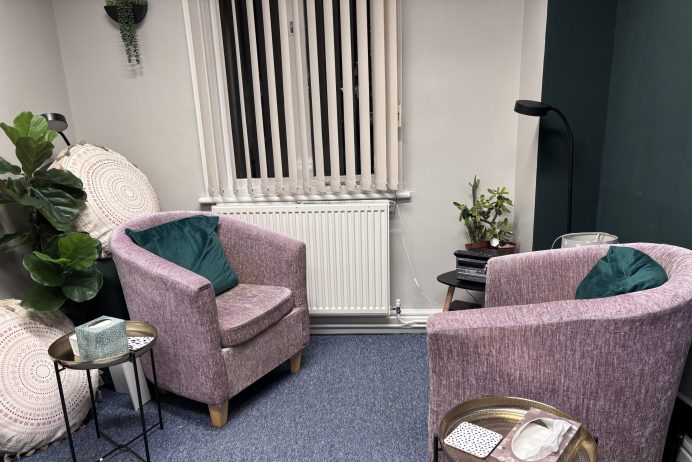
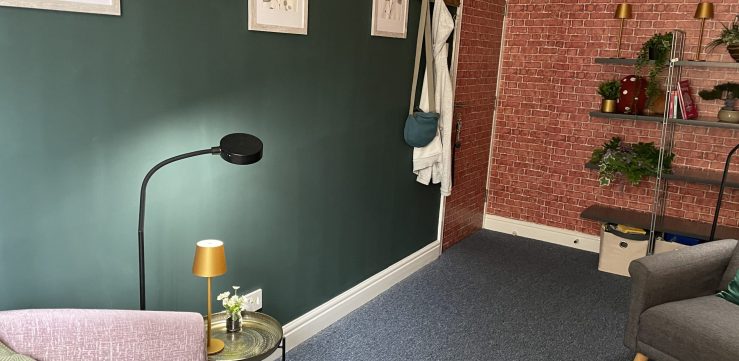
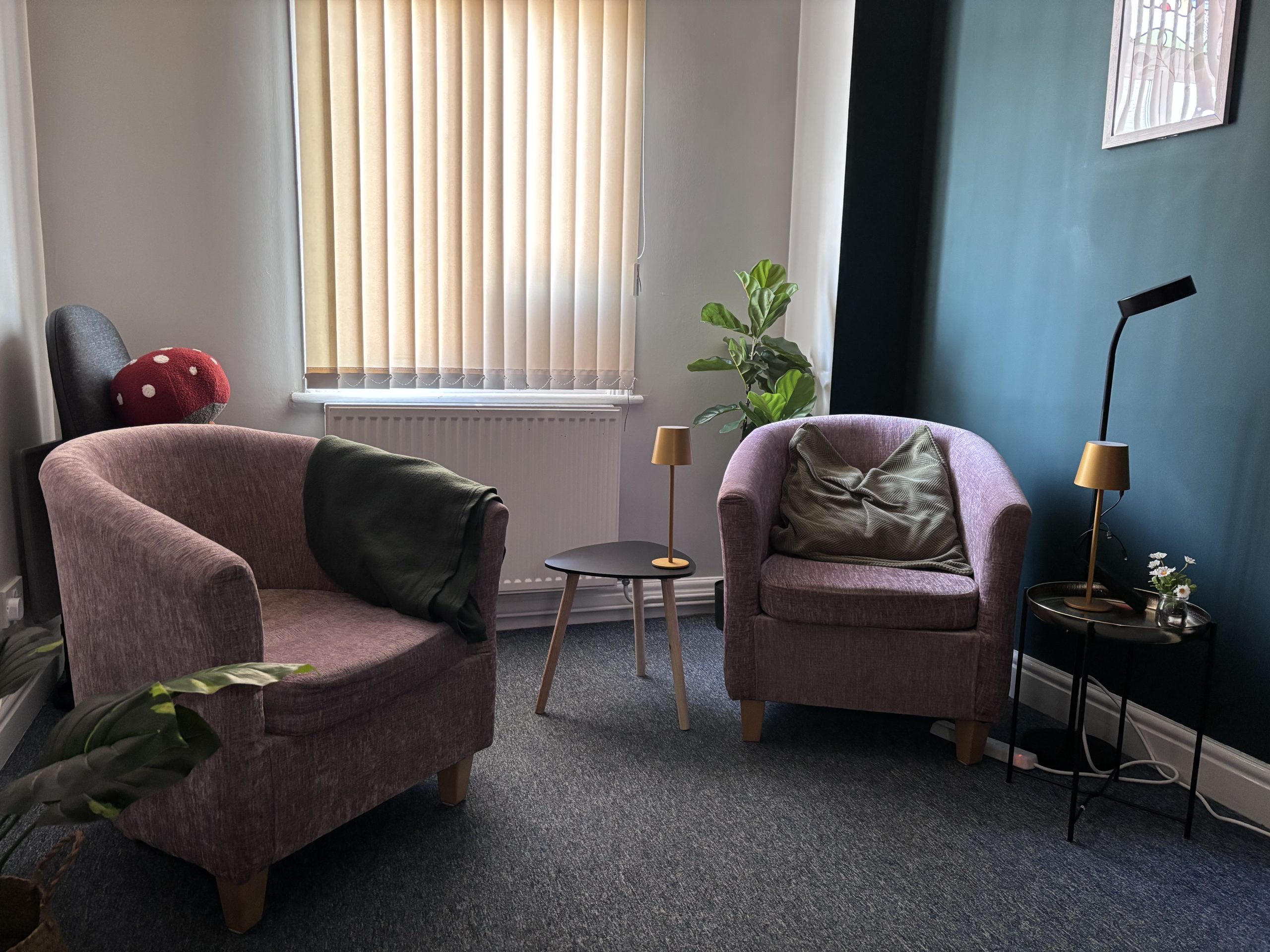
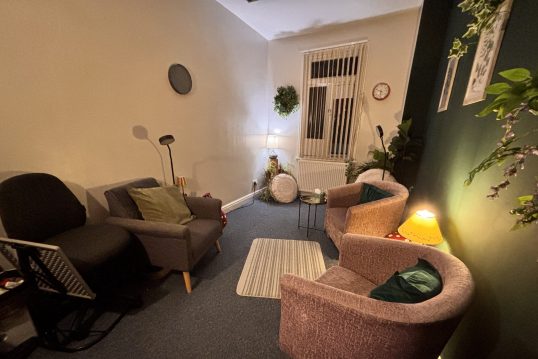
I work from my comfortable counselling room in Rotherham, which is easily accessible from areas such as Barnsley, Sheffield and Doncaster.
Free parking opposite or in Tesco Supermarket for up to 3hours and the pedestrian crossing brings you straight to Moor Road.Opposite the old Post Office.
Fees
Sessions last 50 minutes, usually taking place on a weekly basis, and cost £60 per session.
I also provide a limited number of spaces for those on low-income or for students; contact me to enquire about availability.
Initial assessment appointments last around 75 minutes.
Note that if you want to cancel an appointment I require 48 hours' notice; otherwise you will still need to pay for any sessions missed.
I accept payment in cash or by bank transfer.
I also offer discounts for block bookings paid in full at the start of therapy.(6 for the price of 5). If you are part of Westfield health,you may be able to claim most of the fee back on your payment plan.
Get in touch
Feel free to contact me if you have any questions about how counselling works, or to arrange an initial assessment appointment. This enables us to discuss the reasons you are thinking of coming to counselling, whether it could be helpful for you and whether I am the right therapist to help.
All enquires are usually answered within 24 hours, and all contact is strictly confidential and uses secure phone and email services.
FAQs
Types of therapy
Therapists can be trained in many different approaches or ‘modalities’ and have different ways of working with clients. They may work in one particular way, or they might use techniques from other approaches if they think it would be helpful for you. Some use specialist techniques, for example an art therapist would use art as a means of exploring feelings and thinking. Or they may offer specialist treatment for specific issues such as eating disorders, addictions or depression.
Therapists may see clients as:
• Individuals (one to one therapy)
The most common way of receiving therapy is where you and your therapist are alone together in the same room. But you can also receive individual therapy by telephone or online (by email or via the internet).
• Couples (relationship therapy)
If you’re having relationship difficulties, counsellors may work with you as a couple or as individuals.
• Families
Family counselling can be for the whole family or just some family members and may involve one or more therapists. It might include parents, siblings, extended family and looked after children.
• Groups
Groups of people with a common difficulty, such as bereavement, eating disorders or addictions, may discuss their feelings and emotions together helped by one or more counsellors. The number of people in a group can vary.
It’s useful to discuss what approaches a therapist offers so you can think about what might work well for you.
Types of therapist
These are some of the titles used for talking therapists.
• Psychiatrist
Psychiatrists are trained and qualified doctors who can diagnose mental health problems and, if appropriate, prescribe drugs to help ease the symptoms. Usually they work in or are attached to a hospital. You would usually see a psychiatrist on an irregular basis, perhaps monthly to six weekly.
• Clinical psychologist
Psychologists are trained in behavioural sciences. They can help explore unwanted behaviours and explain how these can be changed. They usually work in hospitals or NHS clinics and clients are referred to them by a psychiatrist or GP. Psychologist appointments can vary from once a week to once a month or so.
• Psychoanalysts
Psychoanalysts are trained to help clients explore and analyse their own unconscious defences and internal conflicts. Once they understand these, it’s easier to change unwanted behaviours or develop more useful ones. You would usually meet with an analyst two or three times a week for a long period, perhaps several years.
• Counsellors and psychotherapists
These are generic terms that cover therapists providing a wide variety of psychological help. They mostly work outside hospitals in a wide variety of settings including GP surgeries, mental health centres, voluntary agencies, organisations, schools, further education, the workplace and in private practice.
Counsellors and psychotherapists will help you understand yourself, your behaviours and relationships with others. You would probably see them on a weekly basis for a set number of sessions.
What therapists can do
• offer a safe and confidential space to help you explore emotional problems
• help you make sense of your world
• help you explore feelings and thoughts to resolve emotional distress
• help you towards a better understanding of yourself and others, which may improve your ability to relate to other
What therapists can't do
• tell you what to do
• prescribe drugs – only an appropriate medical practitioner can do this
• offer help with practical problems, such as financial or housing issues
• provide specific information about health-related problems, unless they work in a specialised service
• meet outside pre-planned sessions
• talk in detail about themselves and their own problems
Therapy sessions
Therapy sessions are held at an agreed time in an agreed place, providing a safe space which is private and undisturbed. They should not take place in cafes, hotel lobbies or any place where you or your therapist can be overheard, recognised or interrupted by family, friends, colleagues or strangers. Sessions are usually regular and not, for example, two sessions one week, one the next and ‘see how we go’ (although some approaches allow flexibility).
Talking about your issues can take time and you won’t cover it all in a single session.
Ask your therapist in advance how many sessions you’ll have as you may only be offered a limited number.
Brief therapy or short-term therapy, for example, can be a maximum of six to 12 sessions. The length of a session can vary according to your therapist’s training and how the therapy is delivered. For one-to-one therapy a session generally lasts 50 minutes to an hour but for specialist therapy, such as trauma treatment, it can be longer. Sessions should be kept to a reasonable length so you and your therapist can maintain energy and focus.
Confidentiality
Your therapist will listen to you in confidence and will not talk to anyone else about you or gossip about what you say.
Protecting a client’s confidentiality and privacy is essential for building trust.
Your therapist will not discuss you with, or get personal information about you from, your GP, employer, family, friends or other agencies without your knowledge.
If you want your therapist to contact your GP or any other agency, you should first agree this with them and confirm the issues to be discussed.
Within organisations such as GP practices, schools, universities and some therapeutic agencies, your information may need to be shared so they can best help you.
Make sure you’re clear what information may be shared and with whom.
Disclosures
However, there are certain circumstances – for example if there’s a serious risk of imminent harm to you or to others - when they may have to break your confidence.
For example, if a client is seriously mentally ill and needs hospitalisation, or if the therapist suspects child or older person abuse, they may refer the client to a GP, social services or the police.
Such referrals are usually made with the client’s knowledge and consent but may not be, depending upon circumstances.
Sometimes therapists are required by law to break confidentiality, for example in the case of terrorist activities. In this situation it can be a criminal offence for the therapist to tell or ‘tip off’ the client that they’ve made a disclosure.
Disclosures can also be made at the client’s request – for example if the client has been abused and asks for help or for assessment reports to help with court cases.